
Electrical Engineering & Software Development
From concept to series production readiness

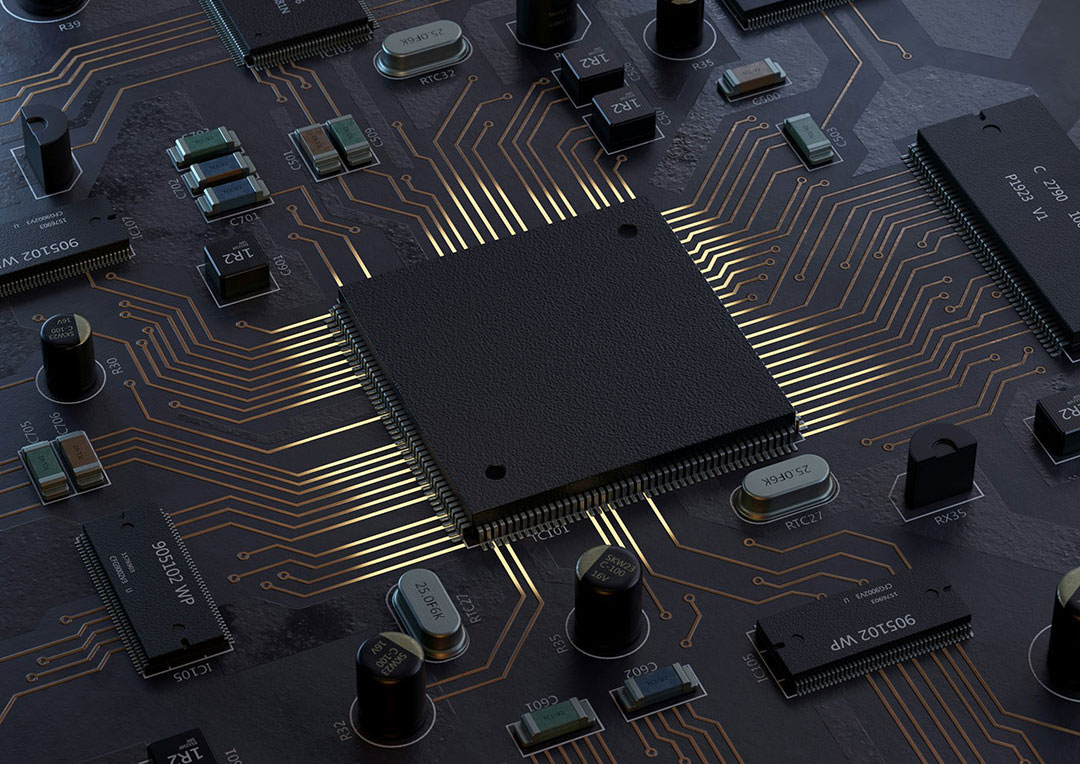
We develop and integrate electronics, electrical engineering concepts, and embedded software—from system architecture and hardware/electronics development to software development for connected, complex, and safety-critical systems.

  • Electronics development & electrical engineering from concept to series production readiness
  • Embedded software development & application software for connected systems
  • System engineering & integration including test, validation, and documentation

Our teams combine deep electrical engineering expertise with modern software development. The result: solutions that seamlessly bring together electronics, embedded software, and system architecture—efficient, scalable, and designed through to series-ready implementation.

  • AUTOSAR Classic/Adaptive
  • UDS/DoIP
  • ISO 26262
  • ASPICE
  • TISAX Level 3
200+

Completed ECU features

95%

Automated test coverage

1216 weeks

Typical go-live time

SERVICES

Software Engineering – End-to-End

Focus on automotive, aerospace, defence.

From embedded development through verification to data & simulation. Clearly structured, auditable, and scalable.
Our engineering services cover the full end-to-end cycle of modern E/E development: from AUTOSAR-based ECU software and HIL testing with dSPACE/NI infrastructures to telematics functions, FOTA rollback strategies, ADAS data pipelines, and open-/closed-loop simulations.
We combine ISO 26262-compliant processes, Automotive SPICE-oriented workflows, and DevOps toolchains (Jenkins, GitLab CI, CANalyzer/CANoe) to ensure reproducible results, high test coverage, and transparent traceability down to the test case level.
Our teams work in V-model or Agile/Scrum setups and integrate seamlessly into existing development, quality, and compliance structures—including reporting, KPIs, documentation, and audit-ready deliverables.

Embedded-Software (ECU)

  • AUTOSAR Classic/Adaptive, C/C++
  • ISO 26262-compliant development
  • Integration, flashing, diagnostics (UDS)
  • CI/CD (Jenkins), code analysis

Telematics & FOTA

  • Client-server functions, log analysis
  • FOTA campaigns & rollback strategies
  • Lab and on-road tests
  • Automation in Python/TypeScript

ADAS Data & Simulation

  • Scenario extraction, labelling, KPIs
  • Open/closed-loop simulation
  • Data platform & pipelines
  • End-to-end validation

Verification & HIL

  • MIL/SIL/HIL – dSPACE SCALEXIO & NI PXI/CompactRIO
  • Test automation (TestStand, LabVIEW)
  • Vector CANalyzer/CANoe, fault injection
  • Reporting & traceability

Test Infrastructure

  • dSPACE/NI Rigs (SCALEXIO, PXI/CompactRIO)
  • Restbus Simulation & Haptic Devices
  • HiL-Scheduler, Test-Farm, Reporting
  • Hardware Integration (Sensors/Actuators)

Standards & Processes

  • V-model, ASPICE-oriented
  • Safety according to ISO 26262
  • Scrum/Kanban, DoD/DoR
  • Configuration & change management

Delivery & Quality

  • Measurable KPIs (coverage, defect rate)
  • Release management & reflashes
  • Traceability down to the test case
  • Audit-ready documentation

PRACTICAL EXAMPLE

Real world example: ECU software & E/E engineering

FROM ARCHITECTURE TO RELEASE – AN INSIDE LOOK AT AN E/E PROJECT

Engineering projects in the E/E domain require clear architectures, consistent processes, and auditable results. Our E/E development combines AUTOSAR configuration, model-based development, and embedded software implementation to realize robust and scalable ECU functions. With transparent release gates, automated toolchains, and full traceability, we ensure reproducible outcomes across the entire development lifecycle.

Through structured architecture definition, model-based functions, deterministic build processes, and automated integration testing, we achieve measurable quality improvements and stable releases for safety-critical applications. Our end-to-end Automotive SPICE workflows provide traceability, reduce defect patterns, and significantly accelerate development cycles for modern ECU and embedded software.

Initial situation

New E/E architecture with multiple control units, bus systems and wiring harness variants. AUTOSAR-based ECU software with diagnostic, communication and safety functions needed to be integrated and validated using HIL/SIL tests. We supported the customer with E/E architecture, wiring harness design, ECU software development and testing.

  • New E/E architecture with multiple control units, bus systems and wiring harness variants
  • AUTOSAR-based ECU software with diagnostic, communication and safety functions
  • High requirements for safety, traceability and stable releases with limited resources and time-to-market pressure
  • We supported the customer with E/E architecture, wiring harness design, ECU software development and interface validation.

Results (KPIs)

  • Integration errors at E/E, software and wiring harness interfaces reduced by approximately 27%
  • Build and integration times shortened by approximately 23% through automated toolchains
  • Wiring harness variants and weight reduced by around 11% without limiting the range of functions

Approach

  • Modelled E/E architecture, signal and variant concept
  • Coordinated wiring harness and circuit diagrams with validation and packaging
  • Implemented AUTOSAR components in C/C++ and integrated them into the basic software
  • Functions verified via HIL/SIL, rest bus simulation and CI/CD regression runs

Stack

  • AUTOSAR Classic, C/C++, Simulink/Stateflow
  • E/E architecture and wiring harness/wiring tools (e.g. PREEvision, E³.series)
  • CANoe/CANalyzer, vTESTstudio
  • dSPACE/NI for HIL/SIL, CI/CD (e.g. Jenkins, GitLab CI)

Deliverables

  • E/E architecture documentation including wiring harness and circuit diagrams
  • Implemented and tested AUTOSAR ECU software
  • Diagnostic matrix, communication specifications
  • HIL/SIL test cases, reports and KPI evaluation

WORKFLOW ELECTRONIC ELECTRICAL ENGINEERING

Workflow (EE) – Agile/V-Model XT and ASPICE at a glance

Structured steps and clear guidelines for modern E/E development – from concept, architecture and implementation to testing, traceability and reporting.

Development process for embedded software and E/E systems

Agile sprints, V-Model XT, and Automotive SPICE in one end-to-end development process.

Our development process is based on V-Model XT as a modern, adaptable process platform. Requirements, architecture, design, and tests are clearly structured and linked to defined milestones—ideal for complex, safety-critical embedded software and E/E systems. In agile sprints, our teams deliver working increments and iteratively refine the backlog and architecture. Automotive SPICE-oriented workflows ensure that roles, deliverables, and KPIs are clearly defined and consistently traceable—down to the individual test case.

  • Agile sprints: incremental software development with a clearly prioritized backlog and regular feature deliveries
  • V-Model XT: traceability from requirements through architecture and design to testing
  • Automotive SPICE: system and software engineering processes (SYS/SWE), project management (MAN.3), KPIs, and end-to-end traceability

ECU Software & E/E Engineering

Architecture through to series production, transparent and auditable, with milestones.

  • AUTOSAR (Classic/Adaptive)
  • C/C++ components
  • MBD: Simulink/Stateflow
  • Bootloader and flashing
  • Diagnostics: UDS/J1939

System Integration & Networks

Reliably integrate vehicle and avionics networks.

  • CAN/LIN/FlexRay/Ethernet (DoIP, TSN)
  • ARINC 429/664 (AFDX)
  • Time Sync & Diagnostics (NTP/PTP, UDS/DIDs/DTCs)
  • Security & Update: SecBoot, FOTA/SOTA
  • Gateway configuration & signal management

Toolchain & Delivery

CI/CD, requirements and traceability end-to-end.

  • Jenkins, GitLab CI
  • CANoe, dSPACE/NI
  • Polarion, DOORS, Jama
  • ASPICE, ISO 26262, TISAX

FREQUENTLY ASKED QUESTIONS

FAQ – E/E Engineering

With clear E/E processes, model-based development and automated testing, we increase the reliability, stability and release security of your systems.

Our E/E engineering processes combine architecture, implementation and testing throughout the entire lifecycle of ECU software. This includes AUTOSAR Classic/Adaptive, model-based development with Simulink/Stateflow, diagnostics (UDS/J1939) as well as bootloader and flashing processes. Through clear release gates, automated test chains and complete traceability, we ensure that software is stable, auditable and suitable for safety-related systems.
#ECU Software #AUTOSAR & Development Processes

Our projects are based on common automotive and avionics standards such as ASPICE, ISO 26262, TISAX and specific network protocols (UDS, DoIP, ARINC 429/664). We integrate these standards directly into the toolchains – from DOORS and Polarion to GitLab CI and Jenkins. This ensures that development and testing phases meet all requirements for security, traceability and maturity.
#ASPICE #ISO 26262 #TISAX & Compliance

Hardware-in-the-loop (HIL) and software-in-the-loop (SIL) enable early fault detection, reproducible testing, and automated regression testing. We work with dSPACE SCALEXIO, NI PXI/CompactRIO and CANalyzer/CANoe to transparently increase test coverage, fault reproducibility and KPIs. Simulation, residual bus models and fault injection complement validation and make complex scenarios reproducible in the laboratory.
#HIL #SIL #dSPACE & Test Automation

We integrate CI/CD processes with Jenkins and GitLab CI, requirements tools such as DOORS, Polarion or Jama, and validation tools such as CANoe, dSPACE and Python/PyTest. This creates a continuous development flow that links architecture, implementation, testing, KPIs and reporting. The result is stable releases, shorter cycles and auditable artefacts.
#CI/CD #Toolchain integration & traceability

We ensure quality through automated test chains, KPI dashboards, a clear definition of done, ASPICE-compliant roles and structured test case derivations. We measure defect rates, test coverage, throughput time, reproducibility and release stability. This allows decisions to be made based on facts and significantly reduces the risk of technical regressions.
#KPI-Driven Development & Quality Assurance

The combination of architecture, development, simulation, testing and documentation creates a fully integrated process. Customers benefit from faster iterations, stable releases, better test coverage and reduced risk of errors. At the same time, the approach can be flexibly adapted to agile sprints or classic V-model structures and seamlessly integrated into existing organisations.
#End-to-end engineering #Development workflow

Questions about E/E engineering?

Send us a brief description of your project – we will get back to you within 24 hours. Together, we will evaluate architecture, toolchains and processes and create the basis for stable, auditable results.

Contact person

Your contact for project enquiries

We look forward to receiving your enquiry.

INFO@DC-GMBH.COM

Services Summary

All engineering services at a glance

#ECU-Software #AUTOSAR

#HIL/SIL & TOOLCHAINS